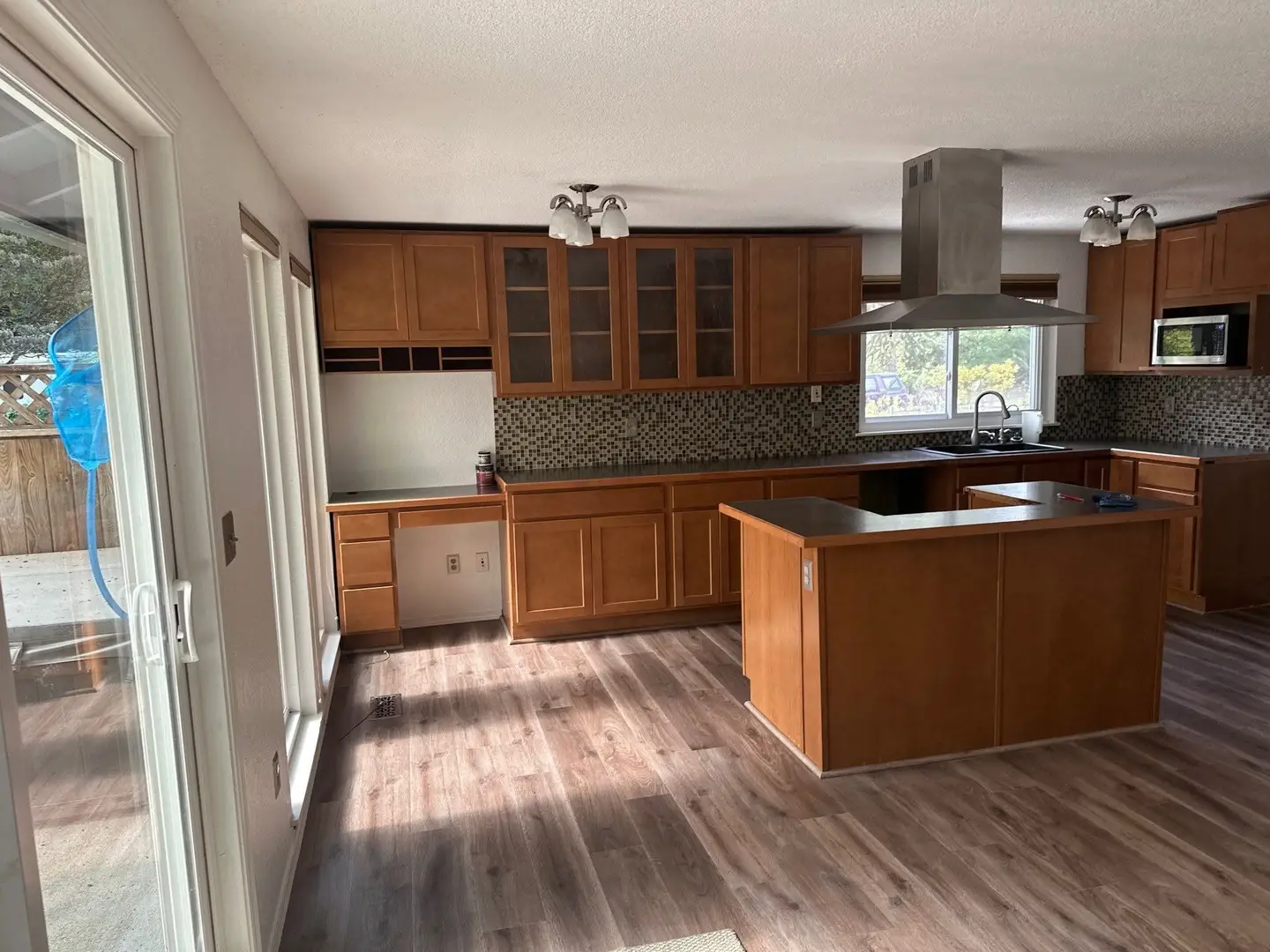
Flooding can turn a kitchen remodeling project from something planned into something homeowners suddenly need to address.
Whether the water came from a failed appliance, leaking supply line, plumbing problem, overflowing fixture, or another source, restoring the kitchen involves more than replacing the materials that look damaged.
Water can travel beneath flooring, behind cabinets, into walls, and through areas that are difficult to inspect from the surface. A successful kitchen remodel after flooding should address the underlying damage first and then rebuild the space with functionality, durability, and future use in mind.
1. Find and Correct the Source of the Water
Before remodeling begins, homeowners need to understand where the water came from.
Replacing flooring, cabinets, drywall, or finishes without correcting the original problem can lead to another round of damage.
Common sources of kitchen flooding may include:
- Dishwasher supply or drain lines
- Refrigerator water lines
- Sink plumbing
- Garbage disposal connections
- Leaking faucets
- Broken supply lines
- Drain backups
- Plumbing inside walls
- Water entering from another area of the home
The source should be repaired before permanent materials are installed.
This is also an opportunity to inspect surrounding plumbing and connections that may be aging or showing signs of deterioration.
2. Remove Materials That Cannot Be Properly Restored
Not everything exposed to water necessarily needs to be replaced, but some materials handle flooding considerably better than others.
Cabinets made with particleboard, MDF, or similar engineered materials can swell when they absorb water. Once this happens, doors may no longer align correctly, cabinet boxes can lose strength, and laminated surfaces may begin separating.
Drywall, insulation, trim, flooring, underlayment, and other materials can also require removal depending on the amount and duration of water exposure.
The goal should not simply be to make the kitchen look dry again.
Damaged materials should be evaluated carefully so new construction is not installed over components that have already lost their integrity.
3. Look Beyond Visible Water Damage
One of the challenges with kitchen flooding is that water rarely stays where it can be easily seen.
It can travel underneath:
- Cabinets
- Flooring
- Baseboards
- Appliances
- Islands
- Wall finishes
- Underlayment
- Subflooring
Water can also enter wall cavities through gaps around plumbing and electrical penetrations.
A floor that appears dry on top may still have moisture underneath it. Likewise, the exposed side of a cabinet may look acceptable while the bottom or back has absorbed significant moisture.
The affected area should be properly inspected and dried before reconstruction begins.
4. Inspect the Subfloor Before Installing New Flooring
Kitchen flooring often receives much of the visible damage during a flood, but the condition underneath it is equally important.
Depending on the flooring material and installation method, water may penetrate seams or edges and become trapped between the finished flooring and the subfloor.
The subfloor should be evaluated for:
- Swelling
- Soft spots
- Delamination
- Warping
- Discoloration
- Loose sections
- Other signs of deterioration
Installing new flooring over a damaged or uneven subfloor can cause problems later.
Addressing the underlying surface first gives the replacement flooring a stable foundation and can prevent unnecessary repairs after the kitchen has already been completed.
5. Determine Whether Cabinets Should Be Repaired or Replaced
Cabinetry can represent a significant portion of a kitchen remodeling project, making the decision to repair or replace damaged cabinets particularly important.
The answer depends heavily on how the cabinets were constructed.
Solid wood components may respond differently to water than particleboard or MDF cabinet boxes. The amount of water exposure and how quickly the area was dried also matter.
Signs that cabinetry may have significant water damage include:
- Swollen cabinet bottoms
- Separating seams
- Peeling laminate
- Warped doors
- Loose joints
- Soft or deteriorated material
- Persistent odors
- Discoloration
Even when only the lower cabinets were affected, homeowners should consider whether replacing a portion of the cabinetry will create problems matching the existing kitchen.
In some cases, a larger cabinet replacement may make more sense than attempting to blend substantially different old and new materials.
6. Check Plumbing Before Closing the Walls
A flooded kitchen often provides an opportunity to evaluate plumbing that would normally be hidden behind cabinets and walls.
If sections of the kitchen have already been opened for repairs, homeowners may want to inspect accessible supply lines, drains, valves, and connections before everything is covered again.
This can be particularly useful in older kitchens where the existing plumbing has been in place for many years.
The goal is not to replace components unnecessarily. Instead, the remodeling process provides an opportunity to identify obvious concerns while access is available.
Correcting an aging connection during reconstruction may be considerably easier than opening the newly completed kitchen later.
7. Electrical Components May Also Need Evaluation
Water and electrical systems require careful attention.
Kitchen flooding may affect outlets, wiring, appliances, switches, junction boxes, and other electrical components depending on the depth and location of the water.
Kitchens also have substantial electrical requirements because they typically contain multiple appliances and countertop circuits.
During reconstruction, homeowners may have an opportunity to improve:
- Outlet placement
- Appliance circuits
- Island power
- Under-cabinet lighting
- Pendant lighting
- General kitchen lighting
- Switch placement
Electrical improvements should be planned before drywall, cabinetry, and countertops are completed so wiring can be placed where it is needed.
8. Consider Whether the Original Kitchen Layout Should Return
Flood damage is frustrating, but reconstruction can provide an opportunity to correct problems that existed before the flooding occurred.
Homeowners do not necessarily have to rebuild the kitchen exactly as it was.
Before new cabinets are ordered, consider whether the previous kitchen had problems such as:
- Insufficient countertop space
- Difficult traffic flow
- Poor cabinet storage
- Limited pantry space
- Inadequate lighting
- An oversized or undersized island
- Appliances in inconvenient locations
- Difficult-to-reach corner cabinets
- Limited trash and recycling storage
If substantial portions of the kitchen are already being replaced, making thoughtful layout changes during reconstruction may be more practical than completing another remodel later.
9. Improve Storage During Reconstruction
Flood restoration can also be an opportunity to rethink kitchen storage.
Modern cabinetry can provide substantially more usable storage without necessarily increasing the physical size of the kitchen.
Useful storage improvements may include:
- Deep drawers for cookware
- Pull-out pantry systems
- Built-in trash and recycling cabinets
- Vertical tray dividers
- Drawer organizers
- Full-height pantry cabinets
- Corner cabinet organizers
- Appliance storage
- Island drawers and cabinets
Storage should be planned around what the household actually keeps in the kitchen.
A well-designed cabinet system can reduce countertop clutter and make frequently used items easier to access.
10. Choose Durable Materials for the Rebuilt Kitchen
When rebuilding after water damage, durability becomes an especially important consideration.
No material can make a kitchen completely immune to a serious plumbing failure, but homeowners can select finishes based on their resistance to everyday moisture, spills, cleaning, and wear.
Flooring, cabinetry, countertops, trim, and wall materials should all be selected according to how the kitchen is used.
For example, countertop materials should be compared for resistance to:
- Moisture
- Staining
- Heat
- Scratching
- Impact
- Routine cleaning
Flooring should also be evaluated for its suitability in a room where spills and plumbing fixtures are common.
The best choice depends on the household, budget, appearance preferences, and maintenance expectations.
11. Plan Appliances Before Ordering Cabinets
If appliances were damaged during the flooding or homeowners already planned to replace them, appliance selection should happen early.
Refrigerators, ranges, cooktops, wall ovens, dishwashers, microwaves, and ventilation systems can all affect cabinetry dimensions and utility locations.
Knowing the exact appliance specifications helps determine:
- Cabinet openings
- Countertop measurements
- Electrical requirements
- Plumbing connections
- Ventilation requirements
- Required clearances
- Appliance placement
Changing appliances after cabinetry has already been ordered can create unnecessary complications.
Planning them together allows the rebuilt kitchen to function as a coordinated system.
12. Think About Water Protection in the New Kitchen
A remodel cannot eliminate every possibility of future water damage, but homeowners can make decisions that may help identify or reduce future problems.
Accessible shutoff valves can make it easier to stop water quickly when a leak occurs.
Homeowners may also want to consider the placement and condition of water supply connections for refrigerators, dishwashers, sinks, and other fixtures.
The remodeling process is an appropriate time to ask where water connections are located and how easily they can be accessed if something goes wrong.
Knowing how to shut off water to individual fixtures and to the home itself can also be valuable during an emergency.
13. Document the Damage and Remodeling Process
When flooding involves an insurance claim, documentation can become an important part of the restoration process.
Before damaged materials are discarded, homeowners may want to maintain photographs and records showing the condition of the kitchen.
Useful documentation may include:
- Photos of damaged cabinets
- Photos of flooring and subfloor damage
- Photos of affected walls
- Images showing the source of the water
- Appliance damage
- Measurements
- Estimates
- Invoices
- Material information
- Repair records
Homeowners working through an insurance claim should communicate with their insurance company regarding its specific documentation and inspection requirements.
The remodeling contractor and insurance company serve different roles, so homeowners should understand what work has been approved and what remodeling changes they may be choosing separately.
14. Understand the Difference Between Restoration and Upgrades
Restoring a flooded kitchen and remodeling a kitchen are closely related, but they are not always the same thing.
Restoration generally focuses on repairing or replacing damaged parts of the home.
A remodel may go further by changing the layout, upgrading materials, improving storage, adding lighting, replacing undamaged cabinetry, or making other improvements.
For example, a homeowner might need damaged lower cabinets replaced but decide to replace the entire cabinet system so the kitchen has a consistent appearance.
Similarly, damaged flooring may need to be replaced while the homeowner chooses to upgrade countertops or lighting at the same time.
Keeping restoration needs and optional improvements clearly separated can make project planning easier.
15. Do Not Rush the Rebuilding Process
After a flood, homeowners understandably want their kitchen back as quickly as possible.
However, rebuilding too quickly can create additional problems if moisture remains trapped inside the structure.
The sequence matters.
The water source should be addressed, affected materials evaluated, damaged materials removed where necessary, and the structure properly dried before permanent finishes are installed.
Once the underlying conditions have been addressed, reconstruction can move forward with greater confidence.
A few additional days spent correctly preparing the kitchen can be far preferable to removing newly installed materials because a hidden problem was overlooked.
16. Use the Opportunity to Build a Better Kitchen
A flooded kitchen is an unexpected disruption, but the reconstruction process can also provide homeowners with an opportunity to improve the room.
Instead of simply recreating the old kitchen, homeowners can consider how the space could work better for their household.
That may mean:
- Increasing countertop space
- Improving lighting
- Adding more drawers
- Creating better pantry storage
- Reconfiguring an island
- Updating flooring
- Replacing outdated countertops
- Improving appliance placement
- Creating better work zones
- Updating the overall appearance
The best improvements are not necessarily the most expensive ones.
Changes that solve existing frustrations can make the rebuilt kitchen considerably more useful every day.
17. Quality Installation Matters During Flood Reconstruction
Flood damage can affect multiple systems and materials at the same time.
Cabinetry, flooring, drywall, plumbing, electrical components, countertops, trim, and appliances may all be part of the reconstruction process.
That makes coordination especially important.
New cabinets installed over an uneven floor, countertops installed on improperly positioned cabinetry, or flooring placed over damaged subflooring can create problems even when the materials themselves are high quality.
The finished kitchen should not simply hide evidence of the flooding.
The goal should be to rebuild the affected areas correctly and create a kitchen that performs well long after the repair is complete.
Confidence Remodel helps homeowners in Puyallup and the surrounding South Hill area rebuild and remodel kitchens after water damage and other unexpected home repairs. Whether the project involves replacing damaged cabinets and flooring or using the reconstruction process to create a more functional kitchen, the team can help develop a plan focused on durable materials, practical layouts, quality installation, and long-term usability.
Contact Confidence Remodel to discuss your kitchen remodeling project and determine what options may work best for your home after flooding or water damage.
Final Thoughts
Kitchen flooding can create damage well beyond the areas where water is immediately visible.
A successful remodeling project starts by correcting the source of the water, identifying damaged materials, allowing affected areas to dry properly, and evaluating the structure before rebuilding begins.
Once those issues have been addressed, homeowners have an opportunity to do more than simply restore the kitchen to its previous condition.
Improved storage, better lighting, durable finishes, updated cabinetry, thoughtful appliance placement, and a more functional layout can turn an unexpected repair into a kitchen that works better for the household for years to come.
