Most Kitchen Delays Begin Before Demolition
When a kitchen remodel runs late, the cause is not always something dramatic that happens during construction. A large number of delays begin earlier, while the project is still being defined.
Cabinets may not be finalized. An appliance may be selected after the cabinet order. Countertop decisions may depend on a sink that has not been chosen. Specialty tile may be several weeks away. A flooring change may create a transition problem that was not considered when the layout was approved.
The more connected decisions that are settled before demolition, the easier it is to build a realistic sequence for the work.
Define What The Kitchen Needs To Solve
Before choosing cabinets, counters, or tile, write down what is not working in the current kitchen.
Maybe storage is the problem. Maybe there is plenty of storage but the work areas are badly organized. Perhaps the island blocks circulation, the lighting is weak, the appliances are poorly placed, or the room feels disconnected from the rest of the house.
Those problems lead to different remodels. A kitchen with a good layout may need better surfaces and storage rather than a complete reconfiguration. A room with poor circulation may justify moving cabinets or changing the island even if the existing finishes are still usable.
The scope should come from the problem, not from the assumption that every visible surface has to be replaced.
Confirm The Layout Before Materials Are Ordered
Layout decisions affect almost everything that follows.
Moving a refrigerator changes cabinet dimensions and electrical requirements. Moving a sink can affect plumbing, counters, windows, and the cabinet below it. Changing an island can affect seating, walkways, lighting, outlets, and how doors or appliances open.
Treat the layout as the foundation of the project. Once the major locations are settled, cabinets, appliances, counters, lighting, flooring, and tile can be coordinated around a known plan.
Making a layout change after cabinets are ordered is very different from making it while the project still exists on paper.
Make Connected Selections Together
Kitchen materials are not independent choices.
Cabinet color affects the way counters and flooring look. Counter thickness and edge details affect backsplash height. The sink and faucet affect countertop fabrication and plumbing. Appliances affect cabinet openings, electrical connections, ventilation, and clearances.
It helps to make those decisions in groups instead of selecting one item every few weeks.
You do not need every decorative detail chosen before the first conversation with a contractor, but the major materials and specifications should be far enough along that the project can be planned around real products instead of assumptions.
Order Long-Lead Materials Early
Some products can be purchased quickly. Others cannot.
Cabinets, custom glass, specialty tile, certain plumbing fixtures, flooring, doors, windows, and appliances can all have meaningful lead times. Availability can also change between the day a product is selected and the day someone is ready to order it.
Whenever possible, critical materials should be ordered and their delivery expectations understood before demolition removes a functioning kitchen.
That does not guarantee that a shipment will never be late or damaged, but it reduces the chance that the entire project is waiting on a decision that could have been made weeks earlier.
Do Not Schedule Around A Perfect Existing House
Remodeling means working with a building that already exists, and the house does not always reveal every condition until materials are removed.
Water damage may be hidden behind a sink cabinet. Flooring may stop under old cabinets. A wall may have been repaired before. Electrical or plumbing work may not be where the current layout suggests it should be. The subfloor may need repair before new flooring can go down.
A realistic kitchen schedule leaves room to evaluate those conditions instead of assuming demolition will reveal a perfect blank slate.
If something unexpected is found, the useful response is to understand what it is, how it affects the project, and what needs to be corrected before the new finishes cover it.
Decide What You Are Keeping
Keeping part of an existing kitchen can be a smart decision when those elements still work.
Maybe the layout is good but the counters and backsplash are worn. Maybe the cabinet boxes are solid but storage can be improved. Perhaps the flooring is worth keeping and the remodel needs to meet it cleanly.
Make that decision before demolition. New work has to meet the material that stays, and those existing components need to be in good enough condition to build around.
A partial remodel can be efficient. An accidental partial remodel, where decisions are made after demolition because nobody decided what was staying, is much harder to manage.
Plan For Life Without A Full Kitchen
Even a well-organized remodel interrupts normal routines.
Before construction begins, decide where you will make coffee, keep a microwave, wash a few dishes, store frequently used food, and handle basic meal preparation. If a refrigerator can remain accessible safely, plan around that. If it cannot, know what the alternative is.
This does not change the construction schedule, but it can make the time during the project far less frustrating.
It also reduces pressure to rush work simply because living without the kitchen is becoming inconvenient.
Changes During Construction Need A Process
Homeowners change their minds. Products become unavailable. Hidden conditions require a different approach. Those things happen.
What matters is how those changes are handled.
Before a change moves forward, everyone should know what is changing, whether it affects cost or schedule, and whether another part of the kitchen now needs to change with it. Kitchens punish casual change orders because so many pieces depend on one another.
Small changes are much easier to manage when everyone understands the effect before the work moves forward.
Leave Time For The Last Ten Percent
A kitchen can look nearly complete while still needing several days of detailed work.
Hardware, trim, caulk, touch-ups, adjustments, final fixture installation, door alignment, transitions, cleanup, and corrections are all part of finishing the room. Compressing that work because the project was scheduled to end the moment the major materials were installed can leave the most visible details rushed.
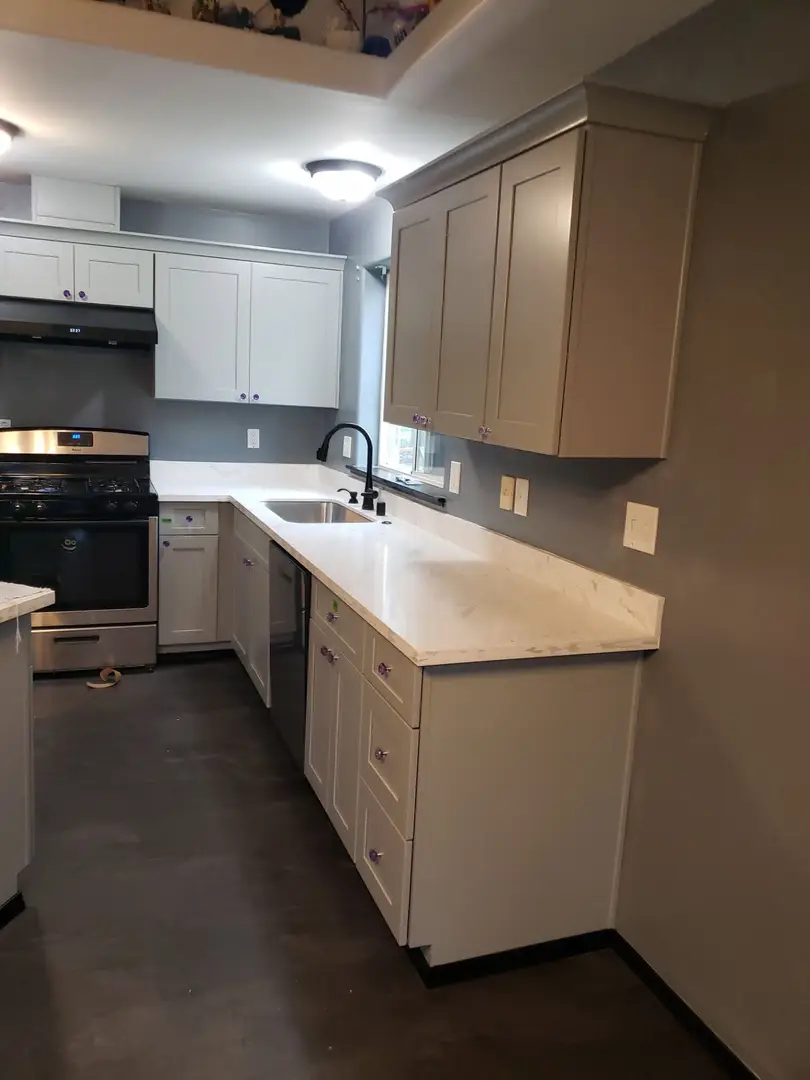
Do not stop at the point where the kitchen looks finished in a photo. Hardware, alignment, trim, transitions, cleanup, and the last corrections still count.
A Better Schedule Starts With Better Decisions
You cannot remove every surprise from an existing house, but you can remove a lot of avoidable uncertainty before the work begins.
Define the problem. Confirm the layout. Make connected selections. Order important materials early. Leave room for existing-home conditions. Decide what stays. Plan for how you will live during the project. Then give the finish work enough time to actually be finished.
Confidence Remodel handles kitchen remodeling in South Hill, Puyallup, Tacoma, and surrounding communities. If you are planning a kitchen project, we can help look at the existing room, talk through the scope, and build the work around what the kitchen actually needs.
Frequently Asked Questions
How long does a kitchen remodel usually take?
There is no single timeline. The duration depends on the scope, cabinet and material lead times, inspections or permits when required, and what is discovered once the existing kitchen is opened up.
What causes the biggest kitchen-remodel delays?
Late decisions, backordered materials, damaged deliveries, changes after work starts, and hidden conditions behind existing finishes are common causes.
Should cabinets and appliances be selected before demolition?
Whenever possible, yes. Cabinet dimensions, appliance specifications, plumbing locations, electrical needs, counters, and clearances are connected decisions.
Can I keep parts of my existing kitchen?
Often, yes. If the layout or selected components are in good condition and work with the new plan, a remodel can be designed around keeping them.
Related Service
Kitchen Remodeling
Explore kitchen layout, cabinet, countertop, flooring, tile, fixture, and finish work.
View Kitchen Remodeling →