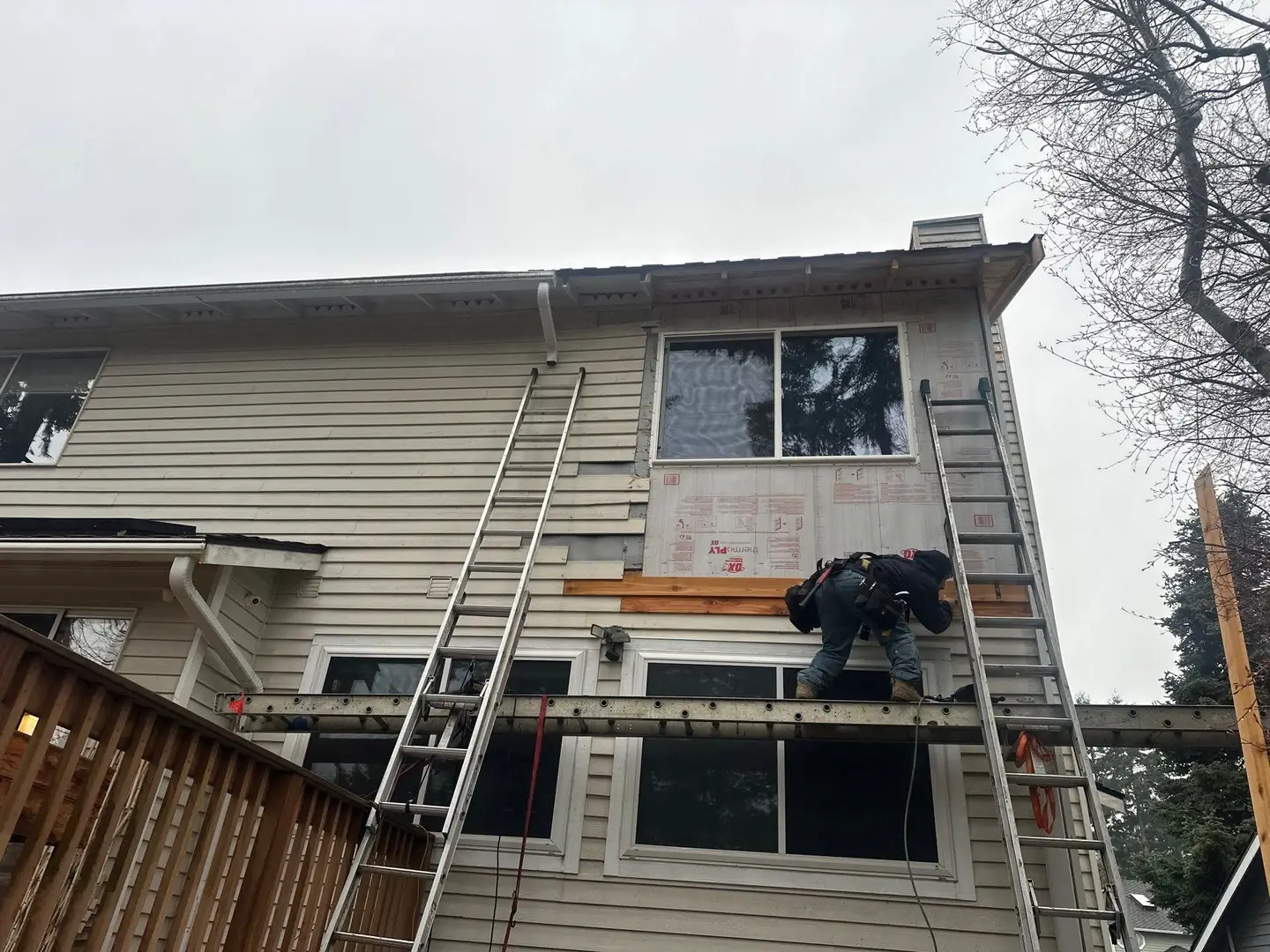
Insurance Repair Has Two Different Tracks
Property damage can make everything feel like one large problem, but there are really two processes happening at the same time.
The first is the insurance claim. The carrier investigates the loss, determines coverage, and decides what the policy will pay for. The second is the construction process. Damaged materials are evaluated, a repair scope is developed, and the affected part of the home is rebuilt.
Those two tracks overlap because the construction scope provides information the claim may need, but they are not the same job. A contractor can document repair conditions, estimate construction work, and explain what is required to rebuild an area. The contractor does not decide what the policy covers.
Keeping those roles clear makes the process easier to understand.
Start With Safety And Documentation
Before thinking about finish materials or repair details, make sure the situation is safe.
If there is active water, electrical danger, structural instability, fire damage, or another immediate hazard, the first priority is protecting people and preventing the condition from getting worse when that can be done safely.
Document visible damage before cleanup changes the condition whenever possible. Photos and videos can help establish what was affected and how the area looked immediately after the loss.
It is usually better to take more documentation than you think you need. Wide photos show the relationship between rooms and materials, while closer photos capture specific damage.
Contact The Insurance Carrier
The homeowner should notify the insurance carrier and begin the claim process.
The carrier may ask what happened, when the loss was discovered, which areas were affected, and what has been done so far to prevent additional damage. An adjuster or other representative may inspect the property and develop an initial estimate or scope.
That initial paperwork is important, but it may not describe every construction condition that exists behind the visible finishes.
A wall, cabinet, floor, or shower can hide damage that is not visible until material is removed. That is one reason the claim and the construction process may continue to develop after the first inspection.
Stop The Source Before Rebuilding
Reconstruction should not be used to hide an active problem.
If a pipe is still leaking, moisture remains in the assembly, or required mitigation has not been completed, new drywall, cabinets, flooring, or tile should not simply close the area back up.
Water losses are a common example. The source needs to be corrected, and the affected area may need drying, mitigation, or remediation before reconstruction begins. The exact steps depend on the loss and the condition of the property.
The same principle applies to other damage. The cause and immediate safety issues should be addressed before the project moves into finish reconstruction.
Understand The Difference Between Mitigation And Reconstruction
Emergency mitigation and reconstruction are often handled as separate scopes.
Mitigation focuses on stopping additional damage and removing or drying materials that cannot remain. Reconstruction puts the home back together after that work is complete.
The handoff between those phases matters. Before reconstruction starts, the contractor needs to understand what materials were removed, what areas remain open, what surfaces are ready for repair, and whether any conditions still need attention.
If that information is unclear, it is worth resolving before new finishes begin to cover the area.
Review The Repair Scope Carefully
Once the damaged area is ready to rebuild, the construction scope should describe the actual work needed to restore it.
A water loss that began in one location may affect drywall, insulation, flooring, baseboard, cabinets, tile, paint-ready surfaces, trim, and transitions into neighboring rooms. Replacing only the first visibly damaged item may not be enough to complete the area.
This is the time to ask practical questions. What is being removed? What is staying? Which materials need to be matched? What happens where repaired material meets an untouched area? Does the scope reflect the condition that actually exists now?
Clear answers before reconstruction begins reduce confusion later.
Additional Damage Can Appear After Materials Are Removed
Some damage simply cannot be seen until demolition opens the area.
When that happens, the condition should be documented before it is covered. Photos, measurements, and a description of what was found can help explain why the construction scope changed.
The contractor needs to determine what has to happen to rebuild the area correctly. The homeowner and carrier separately determine whether the additional work is covered.
Those conversations should happen before the newly discovered condition disappears behind the finished repair.
Matching Existing Materials Can Be One Of The Hardest Parts
Reconstruction happens inside a home that already has existing materials, and those materials may no longer be new or readily available.
Flooring can run continuously through several rooms. Cabinets may have an older finish. Tile may be discontinued. Trim profiles can vary. Paint, grout, and surfaces change over time.
A good repair should fit the surrounding home as closely as the available materials allow. Exact matching still depends on the material, availability, age, and condition of the existing work.
These are useful details to discuss before ordering replacement materials.
Keep Construction Communication Separate From Coverage Promises
Homeowners understandably want to know what will be paid for. The contractor can explain the construction work, what was found, and what it will take to rebuild the area. Coverage questions belong with the insurance carrier and policy.
That separation protects everyone from unnecessary confusion.
If the construction scope changes, the contractor can document the reason. If the carrier needs additional information, that documentation can support the conversation. But the final coverage decision is not something the contractor should pretend to control.
Walk The Repair Before It Is Considered Finished
A final walkthrough matters because reconstruction is more than installing replacement material. The repaired area has to connect back into the existing home.
Look at flooring transitions, trim, cabinet alignment, caulk, tile edges, wall finishes, fixtures, doors, and the places where reconstructed materials meet areas that were not part of the loss.
If something still needs attention, it is better to identify it before the project is considered complete.
Reconstruction Should Put The Home Back Together
Insurance repair work can feel complicated because homeowners are dealing with paperwork and construction at the same time.
Breaking the process into steps makes it easier to follow: document the damage, contact the carrier, stop the source, complete required mitigation, understand the reconstruction scope, document hidden conditions, coordinate materials, and walk the finished repair.
Confidence Remodel handles residential reconstruction and finish work in South Hill, Puyallup, Tacoma, and surrounding communities. We can evaluate the construction scope, provide estimates for our work, document what we find, and rebuild the affected area after it is ready for reconstruction.
Frequently Asked Questions
What should I do immediately after property damage?
Make sure everyone is safe, prevent additional damage when it can be done safely, document the visible condition, and contact the insurance carrier to begin the claim process.
Does the contractor decide what insurance covers?
No. Coverage decisions are made by the homeowner and insurance carrier. The contractor evaluates and completes the construction scope and can provide documentation about the repair work being performed.
What happens if more damage is found after demolition?
The additional condition should be documented before it is covered back up. The homeowner and carrier can then determine how it affects the claim while the contractor explains how it affects the construction scope.
When should reconstruction begin after water damage?
The water source and any required mitigation, drying, or remediation should be addressed before damaged areas are closed back up with new finishes.
Can repaired areas be matched to the rest of the home?
That is usually one of the goals of reconstruction, but exact matching depends on material availability, age, existing condition, and how far the affected finishes extend.
Related Service
Insurance Repair & Reconstruction
Learn about residential reconstruction and finish work after covered property damage.
View Insurance Repair & Reconstruction →