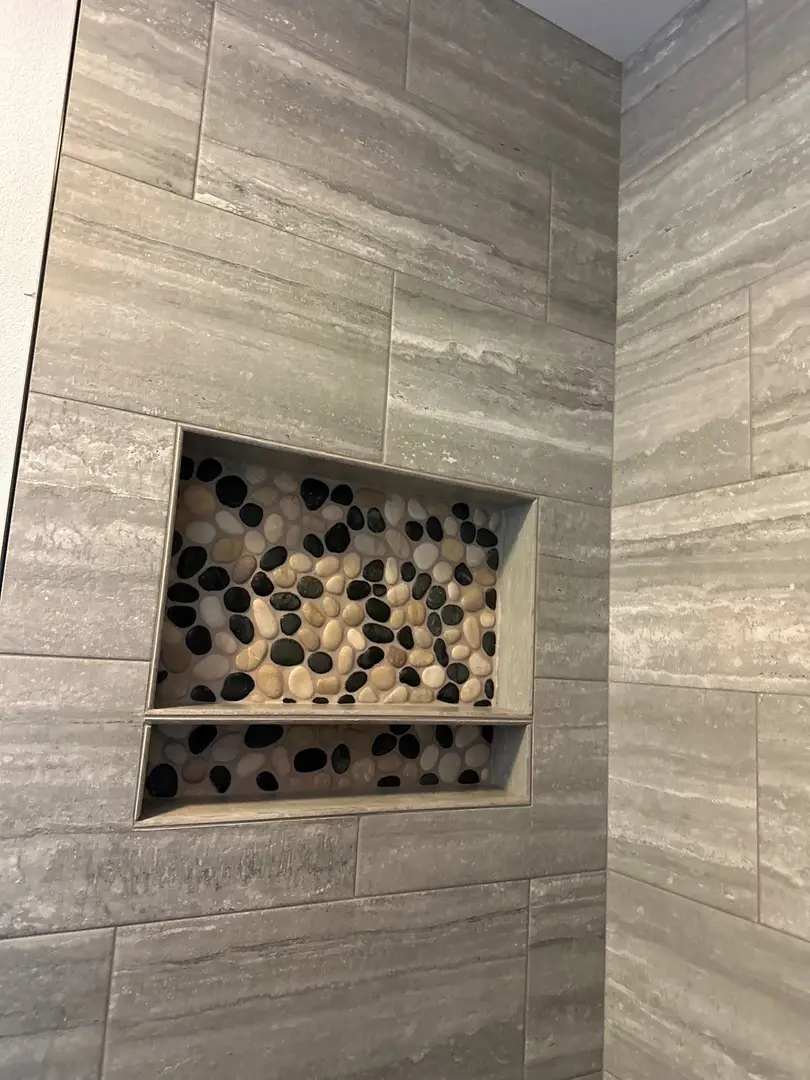
Start With The Room, Not The Sample Board
Tile is one of the finishes you live with for a long time. It gets walked on, cleaned, splashed, bumped, and viewed from every angle. Price and showroom appeal only tell you so much. The tile still has to suit the room, the surface underneath it, the amount of maintenance you want, and the way the space is actually used.
A bathroom floor, shower wall, kitchen backsplash, entryway, and living-space feature wall all ask different things from tile. Before choosing color or pattern, think about moisture, foot traffic, cleaning, lighting, the size of the space, and how the new tile will meet the materials around it.
Porcelain, Ceramic, And Natural Stone Serve Different Purposes
Porcelain is a common choice for floors, bathrooms, showers, and other areas where durability and moisture resistance matter. It is dense and available in an enormous range of sizes and finishes. That versatility makes it useful in many remodeling projects, but density can also make cutting and drilling more demanding during installation.
Ceramic tile is also common, particularly on interior walls and backsplashes. It can be easier to work with and comes in many shapes, colors, and finishes. The specific tile still needs to be appropriate for the location where it will be used.
Natural stone has its own appearance and variation because no two pieces are exactly the same. It can be beautiful, but different stone products have different maintenance and sealing needs. If you want stone, it is worth deciding whether you like the natural variation enough to accept the care that comes with the material.
There is no universal winner. The right answer depends on the room and what you expect from the finished surface.
Tile Size Changes More Than The Look
Large-format tile has become popular because fewer grout joints can create a cleaner, more continuous surface. In some rooms it works beautifully. In others, the size creates awkward cuts or asks too much of an uneven surface.
Large pieces make the condition of the substrate more important because unevenness is harder to hide across a bigger tile. They also affect cuts around walls, niches, plumbing penetrations, doors, cabinets, and changes in floor height. In a small room, one layout may create balanced cuts while another leaves narrow slivers at the edges.
Smaller tile can work better in areas that need more flexibility, tighter curves, or additional grout joints for traction. Mosaics can also solve layout problems in shower floors or detailed areas where a large piece would be impractical.
Choose the size that works with the room, the surface, and the layout instead of choosing by trend alone.
The Surface Under The Tile Matters
A finished tile installation can only do so much if the surface underneath is moving, damaged, uneven, or poorly prepared. Cracked tile, loose pieces, uneven edges, and failed grout are sometimes symptoms of a problem below the visible surface.
Before new tile goes in, the substrate needs to be evaluated for the installation. Wet areas require particular attention because water management is part of the system, not something grout and caulk can solve by themselves.
If old tile is being removed, the condition underneath may not be fully known until demolition begins. That is one reason a good tile project includes time for preparation rather than treating installation as nothing more than sticking pieces to a wall or floor.
Think Through The Layout Before Installation Starts
Tile layout determines where the eye goes and where the difficult cuts end up. Starting in the wrong place can leave tiny pieces at a doorway, an awkward cut through a focal point, or grout lines that do not relate well to a niche, window, vanity, or cabinet run.
In a shower, the layout should account for corners, plumbing penetrations, niches, benches, edges, and the relationship between wall tile and the shower floor. On a backsplash, outlets, windows, cabinet edges, and the underside of upper cabinets all affect the finished pattern.
A few minutes spent looking at the whole surface before setting tile can save a lot of compromise later.
Grout Is Part Of The Design
Grout changes the way the entire installation reads.
A grout color close to the tile can make the surface feel more continuous. A contrasting grout makes the grid and pattern more visible. A close color keeps the field quieter. A contrasting color makes the pattern much more visible.
Joint width also matters. Some tile has more dimensional variation than others, and not every product is intended to be installed with an extremely tight joint. The tile, layout, and installation requirements should guide that decision instead of choosing the smallest possible line by default.
Edges And Transitions Deserve A Plan
Tile rarely exists by itself. It ends at painted drywall, carpet, wood flooring, cabinets, tubs, shower openings, countertops, doorways, and other materials.
Those transitions are some of the first places people notice when an installation looks improvised. Edge trim, finished tile edges, thresholds, changes in height, and the point where one material stops should be planned before installation reaches that area.
The same is true for fixtures and penetrations. Clean cuts around plumbing, outlets, and other interruptions make a large difference in the final result.
Think About Cleaning Before You Commit
A highly textured tile may look great but take more effort to clean. Very light grout may show dirt faster in a high-traffic area. Natural stone may need more maintenance than a homeowner wants to take on.
None of those choices is a problem if the maintenance matches what you actually want to live with.
If you want a low-maintenance bathroom or kitchen, say that early. The material choice, grout, surface texture, and layout can all be discussed with that goal in mind.
Look At The Tile In The Actual Room
Showroom lighting is controlled. Your home is not.
Bring samples into the room and look at them during the day and at night. Compare them to cabinets, countertops, flooring, paint, trim, and nearby materials. A tile can look warmer, cooler, darker, or more patterned depending on the light around it.
If the tile has meaningful variation from piece to piece, look at more than one sample. A single piece may not represent what an entire wall or floor will look like.
The Installation Matters As Much As The Tile
A successful installation combines the material with the surface preparation, layout, cuts, edges, transitions, grout, and details around the rest of the room.
Material and installation decisions belong together. A beautiful product can still look wrong when the layout is careless or the substrate is not ready. A simpler tile can look excellent when the installation is planned well.
Confidence Remodel installs tile in kitchens, bathrooms, showers, floors, backsplashes, and other interior spaces throughout South Hill, Puyallup, and surrounding communities. If you are planning tile work, we can help look at the room, the surface, the material, and the details that need to work together before installation begins.
Frequently Asked Questions
What tile works well in bathrooms?
Porcelain is a common bathroom choice because it is dense and well suited to wet environments, but the right tile also depends on the surface, finish, slip resistance, layout, and where it will be installed.
Do bigger tiles make a room look larger?
They can create a cleaner look with fewer grout joints, but tile size should also fit the proportions of the room and the condition of the surface underneath.
Does the floor need to be perfectly level before tile is installed?
The important issue is whether the surface is suitable for the tile and installation method. Large tile especially can make unevenness more noticeable, so preparation matters.
Should grout be chosen at the same time as tile?
Yes. Grout color and joint width affect how strongly the pattern reads, how much variation you see between pieces, and the overall finished look.
Related Service
Tile Installation
See tile installation for showers, floors, backsplashes, walls, and detailed interior finishes.
View Tile Installation →